The attack on Maud at the warren
Uncle SilasThe attack on Maud at the warren turns an ordinary walk at Knowl into a planned ambush, and marks the moment when Maud Ruthyn’s fear of danger around Madame de la Rougierre begins to take the shape of a specific suspicion. A waiting carriage, a group of men, and Madame’s insistence that Maud remain quiet transform the park into a trap; the intervention of the gamekeepers allows the two women to escape, but the assault on an under-gamekeeper and Madame’s subsequent accusations leave the episode far from resolved.
Background and approach
In the weeks before the attack, Madame had passed through a period of sullenness and dark abstraction, then abruptly became friendly again. Maud found the change unsettling. As winter shortened the days, the pair took a long walk across Knowl’s extensive grounds and reached the warren near sunset.
On a narrow carriage-road, Maud saw a carriage standing apart from the house. A postilion watched the women, while a fashionably dressed woman in the carriage examined them. Maud assumed that the occupants were visitors who had lost their way and asked Madame to find out whether they needed directions. Madame sharply hurried her across a stile instead. The contrast between Maud’s innocent explanation and Madame’s urgent effort to avoid the carriage gives the encounter its first warning sign, though Maud does not yet understand it.
Beyond the stile, on the rolling ground of the warren, Maud saw three men. Two were dressed like gentlemen and initially faced the women; the third, a stocky, rough-looking man, was repacking a hamper. As Maud and Madame drew near, the first two turned away and lowered their cigars almost together. The third called after them, while one of the other men answered that everything was all right. Their coordinated behavior suggests that the meeting was arranged rather than accidental.
The ambush
The three men closed in from separate directions. Maud recognized the shorter of the two who blocked their way as the man who had previously accosted her at Church Scarsdale. The tall man presented the confrontation as a joke and proposed that the women be taken to the carriage to meet the woman waiting there. He called one companion by a mocking nickname and described the proposed visit as a friendly introduction, but his language did not disguise that the women were being treated as prisoners.
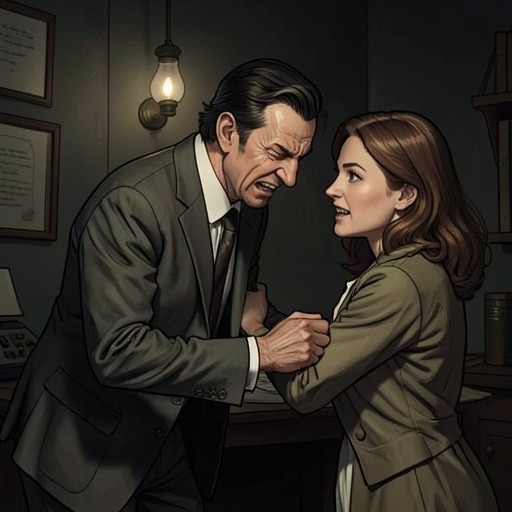
Madame urged Maud to go with her. Maud refused, pulled free of Madame’s hold, and tried to run. The tall man seized and restrained her under a show of playfulness; Madame continued to urge her to be quiet and to comply. Maud screamed, and the man attempted to silence her. In the press of the attackers, she feared that they were about to carry her away. The episode makes the difference between the men’s joking manner and their actual use of force unmistakable: the pretence of a harmless social invitation serves to conceal an assault.
At the sound of other voices approaching, the attackers fell silent. Madame recognized the gamekeepers and called on them for help. Maud ran a short distance and clung to Dykes as he raised his gun, pleading with him not to fire because she feared the attackers would retaliate. Dykes sent the other gamekeeper to lock the gate; the three men retreated toward their carriage, and Madame hurried Maud toward the house.
Pursuit and aftermath
Maud’s father, Austin Ruthyn, met them in the hall. On hearing Madame’s account, he was furious and immediately went out with servants in the hope of intercepting the attackers at the park gate. He was gone for nearly three hours, leaving Maud anxious about what might be happening. During his absence, the injured under-gamekeeper, Bill, arrived. The attackers had beaten him after he tried to stop their retreat, wrested away his gun, and caused it to go off in the struggle.
The attackers escaped. Austin traced them to Lugton Station, where they had taken the railway, but could not determine where the carriage and post-horses had gone. The assault on Bill convinced those at Knowl that the confrontation was deliberate and ferocious, not a drunken frolic. Yet the group’s escape, and the conflicting recollections of Maud and Madame, left Austin without clear evidence for a prosecution. Although the gamekeeper supported Maud’s description, Madame was both firm and markedly different in her account. Austin was reluctant to expose his daughter to the publicity and strain of a court case without a stronger basis for action.
Suspicion and significance
Afterward, Madame appeared emotionally agitated: she spoke incessantly, wept, and repeatedly prayed in thanksgiving for their deliverance. In private, however, she blamed Maud for resisting. She argued that the men had been drunk, that Maud’s screaming and struggle had made them more violent, and that Bill’s danger was Maud’s fault. This reversal shifts responsibility from the men who attacked them to the person they had targeted, and sharpens the gap between Madame’s public display of gratitude and her private hostility.
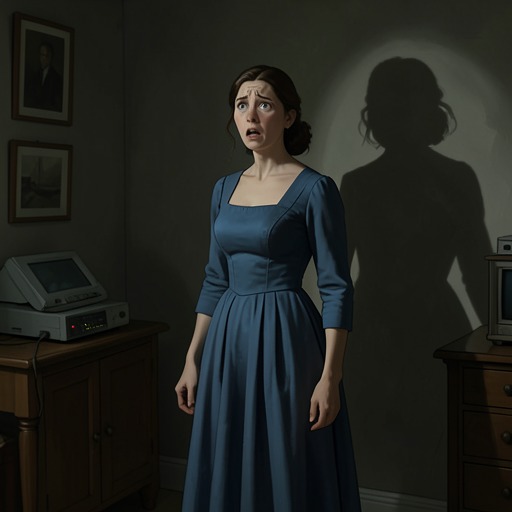
Mrs. Rusk voiced a suspicion that Madame knew more about the men than she admitted and connected the episode to Madame’s earlier proposal that she and Maud go to Church Scarsdale. Maud could not prove the accusation and did not wholly accept it, but the possibility unsettled her: Madame’s behavior during the attack, her advice to submit, and her later blame no longer seemed easy to explain as mere confusion. The warren ambush therefore becomes both a physical threat and a crisis of trust. It leaves Maud safely back at Knowl, but more alert to the possibility that the person charged with guiding and protecting her may have helped expose her to danger.